Large Tree Removal
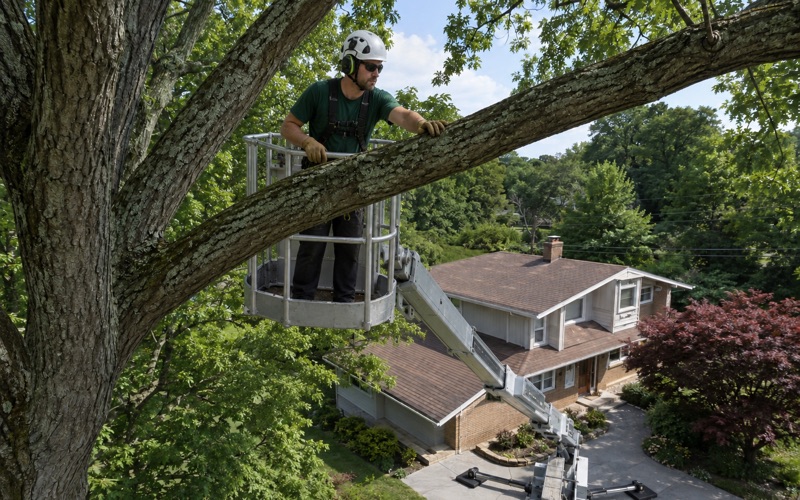
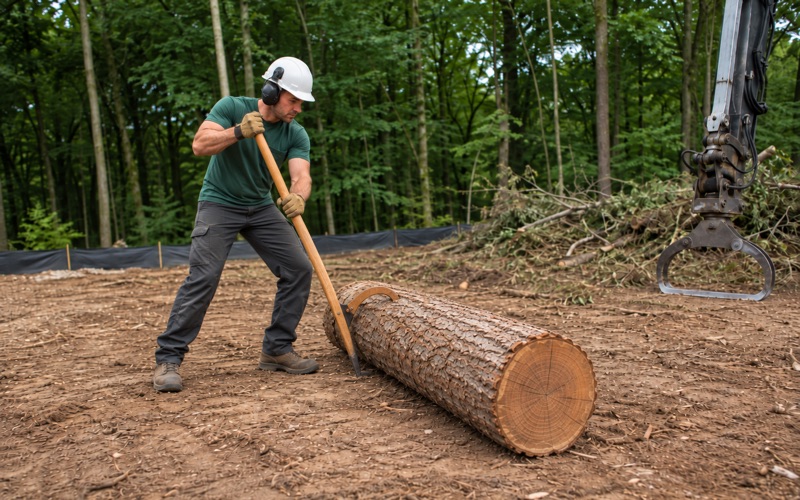
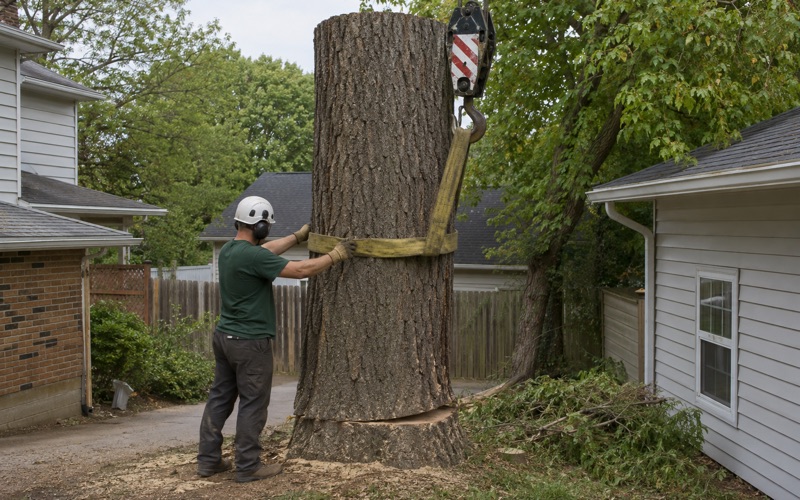
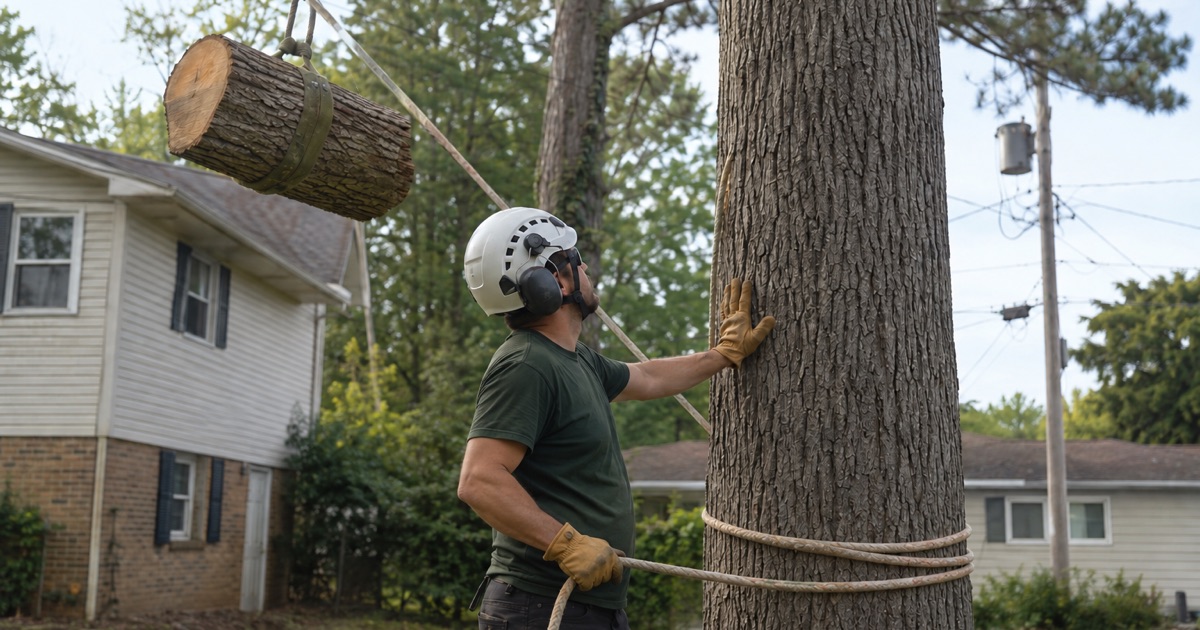
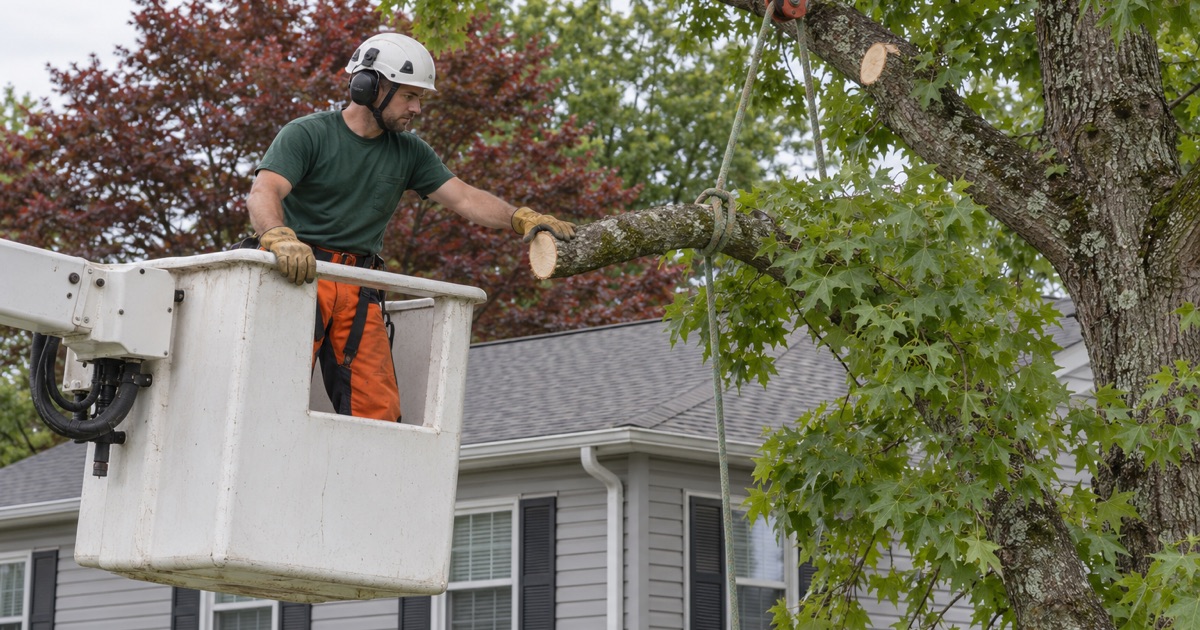
The average tree in Glen Burnie stands about 63 feet, and anything at or above that height in a residential lot is a rigging or crane job rather than a felling job. We plan the drop zone, the rigging points and the exit route for the wood before the estimate is priced, because the access is what sets the number.
Dead and Hazardous Tree Removal
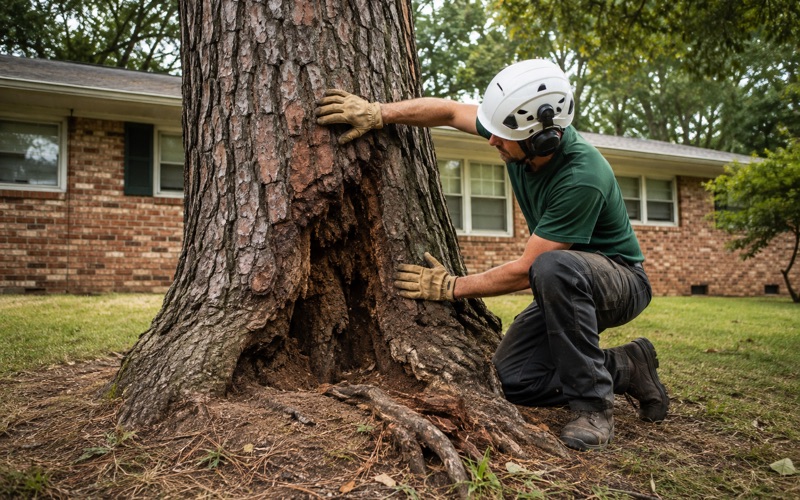
Dead wood behaves differently: it breaks rather than bends, and it will not hold a climber or a rigging load. Standing dead trees come out by bucket, crane or sectional dismantling from an aerial lift, never by a climber working the stem, and we say which method the tree requires in the written estimate.
Crane-Assisted and Tight-Access Removals
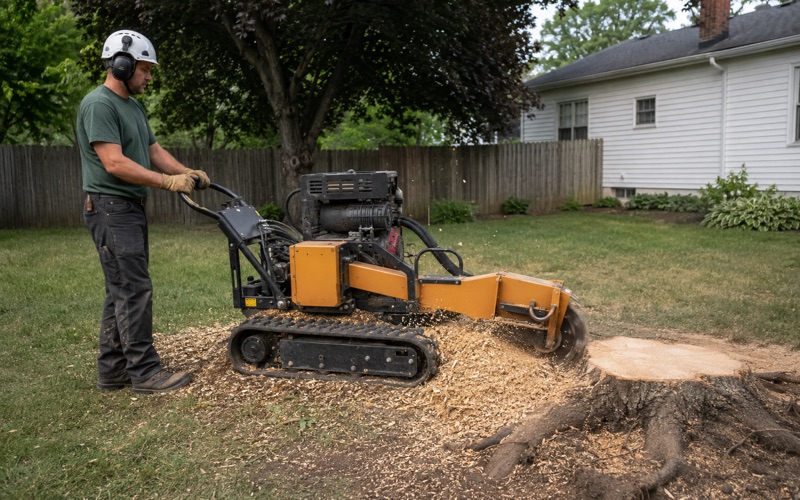
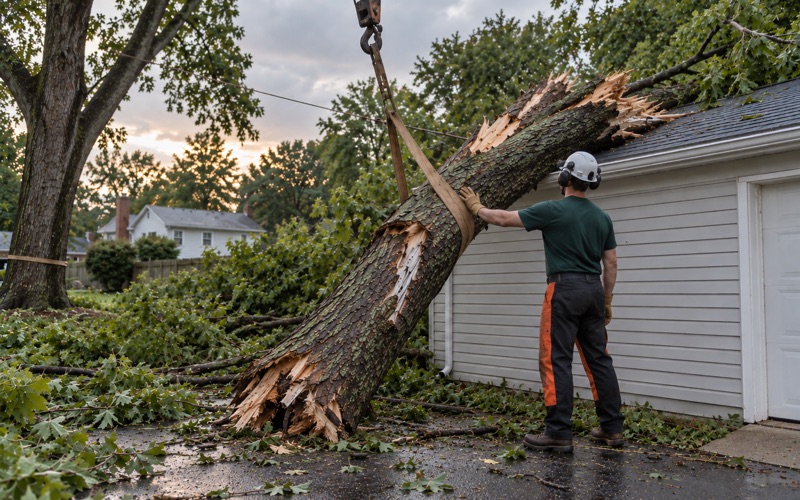
A crane is the answer when the drop zone is a neighbor’s roof or a pool; compact equipment is the answer when the only way in is a side gate. Both appear on the estimate as a method rather than a surcharge, so you can see why one tree costs more than the identical tree two doors down.
Removals Near Service Drops and Power Lines
The service drop from the pole to your house is the homeowner’s side and is where most residential line contact actually happens. We coordinate a temporary drop disconnect where the work needs it, rather than working a saw within reach of an energized conductor.
Do You Need a Permit to Remove a Tree in Maryland
For an ordinary yard tree on private property outside a regulated area, generally no. Permits attach in specific circumstances: a roadside or right-of-way tree, anything inside a Critical Area buffer, and forest conservation review at a subdivision, grading or sediment control permit on a site of 40,000 square feet or more.
Removals in the Chesapeake Bay Critical Area
The Critical Area is the 1,000-foot band landward of tidal water and tidal wetlands, and whether your address falls inside it turns on that measurement rather than on the town. An approved Vegetation Management Plan is required before anything is cut inside the buffer, and a pre-1985 half-acre lot carries a 6,534 square foot clearing cap with mitigation at 1.5 times.
Roadside Trees and the Right-of-Way Permit
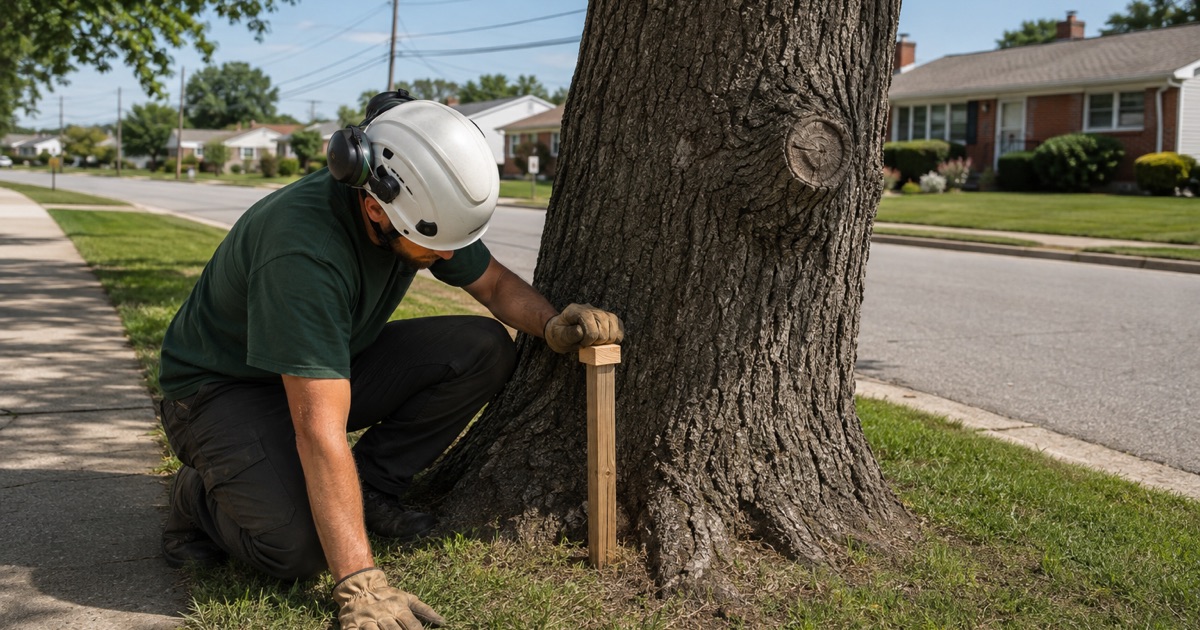
A tree in the public right-of-way is not yours to remove, even where you mow around it. A Roadside Tree Care Permit runs through the Maryland Forest Service, approval takes about 14 days and the permit expires after a year. We file it as part of the job rather than leaving a homeowner to work out which agency owns the strip.
A Neighbor’s Tree Over Your Property Line
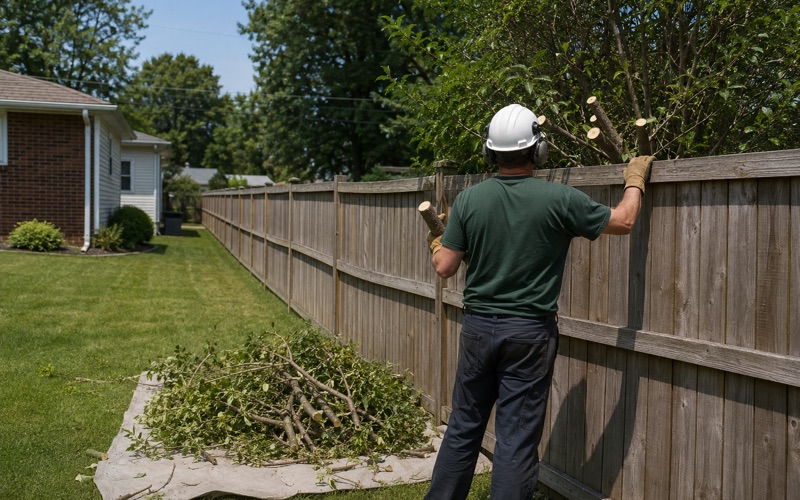
You may generally prune branches back to the property line, at your own cost and without harming the tree, and you may not cross the line to work on the trunk. We survey where the stem actually stands before quoting, because a tree that looks like yours from the driveway frequently is not.
Who Is Responsible for a Fallen Tree
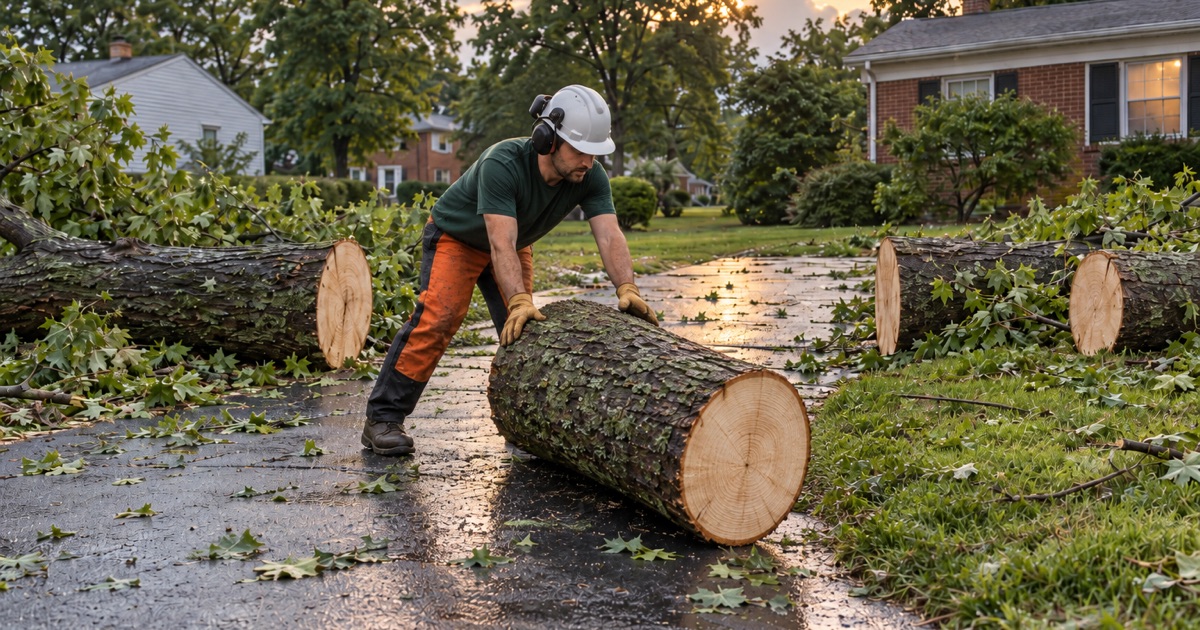
Where a healthy tree falls in a storm, the damage is normally the responsibility of the property it lands on. Where the tree was known to be dead and the owner was put on notice, an insurer may pursue subrogation against that owner, which is why a dated written assessment of a dying tree is worth having.
What Tree Removal Costs and What Is Included
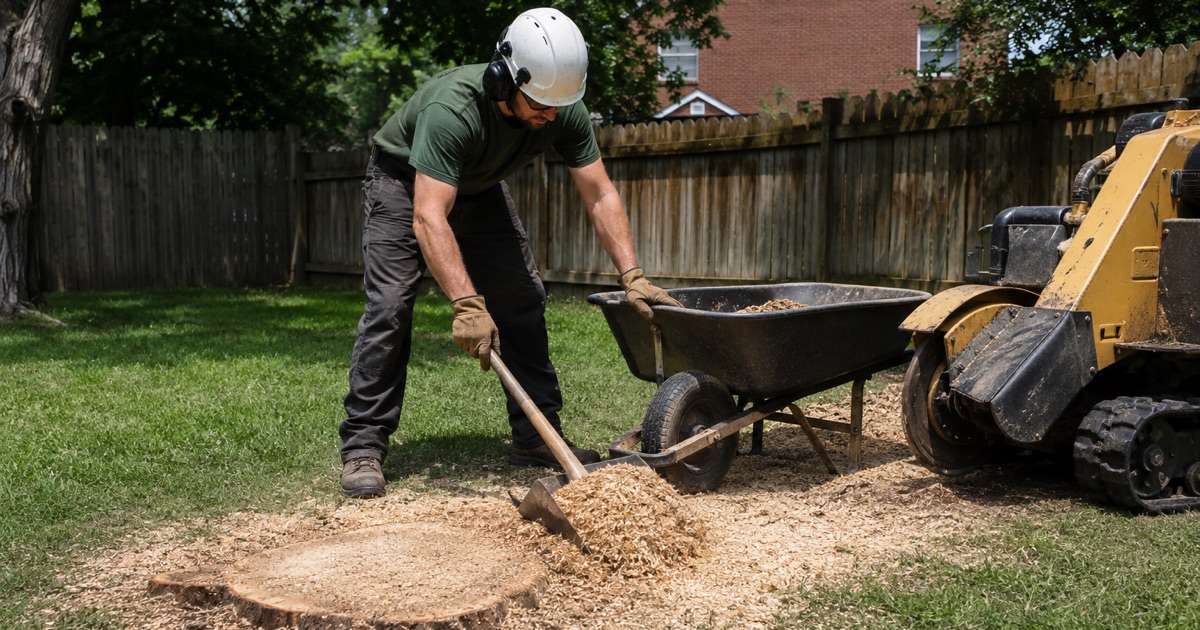
Removals in Glen Burnie run around $645 on average, with a common range of roughly $244 to $1,032 and small trees near 10 feet at $100 to $300. Baltimore-area crew time runs $210 to $277 per hour. Stump grinding, log haul-away and chipping are commonly billed separately, so our estimate names which of them your price already contains.